What parents can do at home that genuinely helps with the 11+
You do not need to become your child's examiner to support 11+ preparation. Reading and talking together, noticing everyday maths and making space for questions can all strengthen useful habits. A calm response when something goes wrong helps too. Give your child chances to think independently, and keep home a place where one difficult question does not become a judgement.
Make reading a conversation
Read for enjoyment as well as preparation. Ask what a character might be feeling, what a new word could mean from its context or why an author chose a particular phrase.
Let your child choose some of what they read. Interest makes it easier to keep going.
Find maths in ordinary moments
Cooking, shopping, journeys and games offer chances to estimate, calculate and explain a choice. You can ask, ‘How did you work that out?’ without making every activity feel like homework.
If a foundation is shaky, spend time understanding the idea rather than rushing through harder questions.
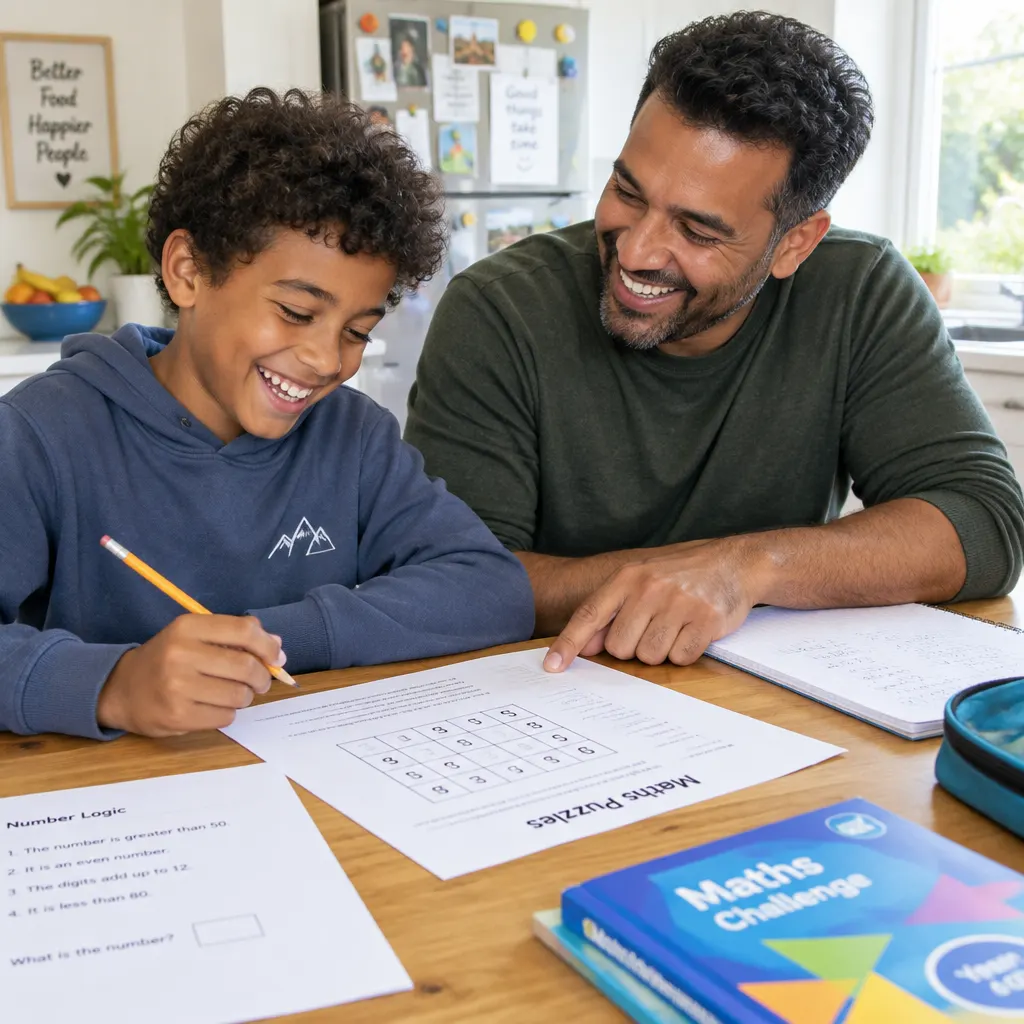
Let your child try first
A little productive struggle can help children build independence. Give them time to attempt a question before offering a clue, then ask them to explain their thinking.
If frustration is rising, pause. Coming back later can be more useful than pushing through in the moment.
Protect confidence
Praise the process: trying a new approach, spotting an error or asking for help. Avoid comparing scores with friends or siblings.
You can take preparation seriously while reminding your child that an exam does not measure everything that makes them who they are.